Este texto es para que se preparen - o se analicen- también es para aquellos que han convivido con un ejemplar de la especie más emocional del planeta: un cubano.
Aunque el título puede engañar yo no creo que estos son hábitos desagradables sino que dan una tonalidad a nuestra cultura. ¡¡ ENTONCES CHICO !! vamos a meterle
This text is for you to prepare - or self-analyze - it is also for those who have lived with a specimen of the most emotional species on the planet: a Cuban.
Being honest the title may be a little bit of a clickbait , I do not believe that these are unpleasant habits but rather that they give a tone to our culture. ¡¡ ENTONCES CHICO !! vamos a meterle
1 . Cortesía en el teléfono.
Esto es algo que la verdad ya no aplica mucho, aún así creo que vale la pena mencionarlo. Cuando yo era una niña , e incluso en la primera mitad de mi adolescencia , conversar por teléfono –uno de línea fija, no un móvil– solía ser todo un fenómeno en Cuba. El acto de simplemente coger el teléfono, marcar un número y conversar con una persona que está al otro lado de la línea era algo maravilloso . No había que tener una razón para la llamada la cosa era dar muela. No puedo enumerar la cantidad de veces que la gente me llamaba simplemente para saber que estaba haciendo. Aún lo hacemos de vez en cuando, principalmente con los minutos de los paquetes de datos. Las llamadas de ahora - al no ser tan seguidas- son un pase lista donde preguntamos por todos desde los padres hasta los tíos de los vecinos. Esta costumbre muy cubana de pasar 1 hora pegados al teléfono se ha ido perdiendo con la popularización de la mensajería instantánea que ha convertido una conversación en tiempo real y sin posibilidad de borrar lo que has dicho , en un horror.
Me da mucha gracia también pensar en la habilidad que tenemos para equivocarnos de número ( sé que esto es una cosa nuestra porque tengo amigos regados por el mundo entero y de distintas nacionalidades y al parecer los equivocados no son algo tan común). En dependencia de donde trabajes, de si tienes un teléfono fijo e incluso de que tan viejo sea tu número de celular tendrás más o menos equivocados llamándote . Yo me he dado cuenta de que al menos 5 o 6 veces al mes terminas aclarando que no, no eres Margot y que no, esto es una librería no la farmacia. Peor aún es el hábito de llamarte y cuando contestas y no reconocen tu voz preguntarte quien eres en tono de desconfianza.
"¡Señor pero si usted me llamó a mi!"
"No mijita no, yo estoy llamando a Ramón dime tú cual es tú nombre"
Y ni hablemos del ancestral arte de correr máquina, conozco amistades que empezaron así e incluso relaciones. Tan popular era este entretenimiento que una vez hicieron un programa televisivo donde presentaron una pareja que se conoció mientras la mujer le corría máquina al hombre; ella quien era negra y corpulenta le había dicho inicialmente a él que era rubia, blanca y delgada. Daría lo que fuera por tener un clip o un video que mostrarles porque recuerdo haberme reído mucho con la historia completa.
1 . Courtesy on the phone.
This is something that really doesn't apply much anymore, but I still think it's worth mentioning. When I was a child, and even in the first half of my adolescence, talking on the phone – a landline, not a cell phone – used to be quite a phenomenon in Cuba. The act of simply picking up the phone, dialing a number and chatting with a person on the other end of the line was wonderful. You didn't have to have a reason for the call, the thing was to chit-chat. I can't count the number of times people called me just to know what I was doing in that moment. We still do it from time to time, mainly with data package minutes. The calls now - as they are not so frequent - are a roll call where we ask for everyone from the parents of the person we are talking with to the neighbors' uncles. This very Cuban custom of spending 1 hour glued to the phone has been lost with the popularization of instant messaging, which has turned a conversation in real time, without the possibility of deleting what you have said, into a horror.
It also is very funny to think about the ability we have to get the wrong number (I know that this is our thing because I have friends spread all over the world and of different nationalities and apparently being wrong when calling is not that common). Depending on where you work, whether you have a landline and even how old your cell phone number is, you will have more or less wrong people calling you. I have noticed that at least 5 or 6 times a month you end up clarifying that no, you are not Margot and that no, this is a bookstore, not a pharmacy. Even worse is the habit of calling you and when you answer and they don't recognize your voice, start to asking who you are in a tone of distrust.
"Sir, but you called me!"
"No mijita no, I'm calling Ramón, tell me what your name is"
And let's not even talk about the ancient art of pranking people , I know friendships that started that way and even relationships. This entertainment was so popular that once I saw a television program where they presented a couple who met while the woman was pranking the man; She, who was black and chubby, had initially told him that she was blonde, white and thin. I would give anything to have a clip or video to show you because I remember laughing so hard at the whole story.
I am looking for the book "The Cuban who does not shout loudly" //Science Fiction at the end of the hall.
2 . Nacimos sin regulador de volumen.
Los cubanos somos notoriamente ruidosos , es cierto se nos conoce por eso en el mundo entero. Cuanto más ruidosos nos veas, más entusiasmados nos sentimos por un tema. Si puedes intenta ver el nivel del volumen como algo directamente proporcional a que tan interesados estamos en la cuestión de la que se hable; a menos que sea un chisme, porque en ese caso hablamos pársel. Me dan mucha lástimas los turistas que no saben español (o los que saben pero una versión muy básica que no les prepara para el español de Cuba ),porque sé que una charla simple de las que se tienen en las esquinas sobre fútbol o pelota puede llegar a parecer el inicio de una pelea con resultados mortales. Así de gritones somos.
Y ojalá y fuéramos sólo ruidosos en nuestras conversaciones, pero no somos un país de sonidos así que la vida en general es simplemente estruendosa. Que importa que estés en el corazón de la ciudad igual hay una alta posibilidad de que escuches un gallo que lo mismo canta a 3 a.m que a las 6 a.m, también SIEMPRE va a haber perros ladrando y si , como yo , tienes la gran suerte de venir de un barrio ya tú sabes vas comenzar a escuchar gritos y saludos posiblemente antes de desayunar. Luego, tan pronto como se toma la primera taza de café, y todo el mundo sale para sus labores empieza el ruido ambiente : la música , el televisor, alguna persona mayor con su radio, las lavadoras y los carros ... todo eso junto compitiendo a ver quien alcanza el mayor volumen. Te digo a ti que cuando yo supe que en Suiza era ilegal descargar el inodoro después de las 10 p.m para no molestar con el ruido me quedé en shock. ¿Cómo la gente mantiene su sanidad mental sin esa sensación de vida sonora en sus países?
Prefiriero mil veces la sinfónica de animales, lavadoras, cafeteras, vendedores ambulantes (bocadito de helado esto es contigo) y chismes que un espacio donde el silencio sea una especie de obligación y no un disfrute.
I'm not shouting I'm Cuban
2 . We were born without a volume regulator.
We Cubans are notoriously loud, we are known for that throughout the world. The louder you see us being, the more excited we are about a topic. If you can find it in your heart try to see the volume level as something directly proportional to how interested we are in the issue being talked about; unless it's gossip, because in that case we speak Parseltongue. I feel very sorry for tourists who don't know Spanish (or those who know but a very basic version that doesn't prepare them for Cuban Spanish), because I know that a simple conversation like the ones you have on street corners about football ⚽ or baseball It may seem like the start of a fight with deadly results. That's how loud we are.
And I wish we were just loud in our conversations, but we are a country of sounds so life in general is just loud. It doesn't matter that you are in the heart of the city, there is a high possibility that you will hear a rooster that crows at 3 a.m. as well as at 6 a.m. There will also ALWAYS be dogs barking and if, like me, you are very lucky and you come from a low income neighborhood, you know, you will start to hear shouts and greetings, possibly before having breakfast. Then, as soon as the first cup of coffee is drunk, and everyone leaves for work, the ambient noise begins: the music, the television, some elderly person with their radio, the washing machines and the cars... all of that together competing to see who reaches the highest volume. I tell you, when I found out that in Switzerland it was illegal to flush the toilet after 10 p.m. so as not to disturb with the noise, I was shocked. How do people maintain their mental health without that sense of sound life in their countries?
I would much prefer the symphony of animals, washing machines, coffee makers, street vendors (ice cream bite, this is with you) and gossip than a space where silence is a kind of obligation and not something to enjoy.
Imagen promocional de la serie humorística "Al habla con los muertos"//Promotional image of the humorous series "Al habla con los muertos"
3. La seriedad no es nuestro fuerte.
Si te defines como una persona seria y sensata, vas a aprender muy rápido que eso no significa mucho aquí en Cuba pues el humor es uno de los elementos esenciales de nuestra vida, tanto así que tenemos por costumbre bromear con las cosas malas y con las malísimas .Hay una frase popular que dice "el cubano se ríe de todo". Y es que, seguramente como mecanismo de defensa, oponemos el chiste, el sarcasmo y hasta la broma ingenua a cualquier situación de la cotidianidad.
¿ Qué llevamos 3 días sin agua? se bromea con ir a bañarse al malecón
¿Qué no llega el chícharo a la canasta básica porque dicen que se congeló el mar en Canadá ? se hacen 30 memes por día.
¿ Que te quitan la luz día sí y día también? Se le da cuero al que se compró recientemente un aire acondicionado y ahora no puede usarlo por miedo a que se rompa.
Lo cierto es que, aunque este sentido humorístico ayuda que nos manifestemos alegres y optimistas aún en momentos de crisis, a veces es demasiado el bonchecito y tenemos una tendencia a perder de vista lo importante en pos del cuero o la risa fácil. Ahora ya no sucede tanto porque nos estamos educando al respecto pero antes era muy común hacer un humor cruel a partir del cuerpo de otras personas o características como una minusvalía física/mental. A modo general yo siento que esta capacidad eterna e inagotable de reírnos de nosotros mismos favorece el acercamiento entre las personas y eso contribuye a ese sentido de familiaridad que tanto nos elogian siempre.
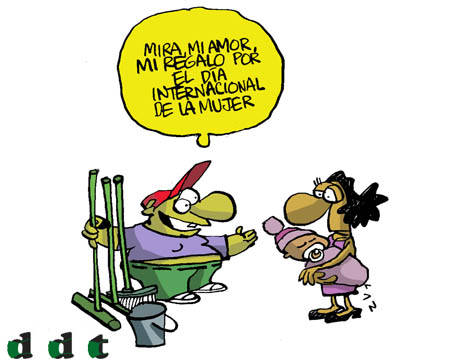
Look my love, my gift for International Women's Day.
3. Seriousness is not our strong suit.
If you define yourself as a serious and sensible person, you will learn very quickly that that does not mean much here in Cuba since humor is one of the essential elements of our life, so much so that we have the habit of joking about bad things and about even worse things. There is a popular phrase that says "the Cuban laughs at everything." And, surely as a defense mechanism, we oppose jokes, sarcasm and even naive jokes to any everyday situation.
What have we been doing without water for 3 days? It is joked about going to bathe on the Malecón
There are peas that do not get in time to be on this month basic basket because the sea froze in Canada? 30 memes are made per day.
That there are balckouts day in and day out? We are going to make fun at someone who recently bought an air conditioner and now cannot use it for fear of it breaking.
The truth is that, although this sense of humor helps us appear happy and optimistic even in times of crisis, sometimes the joke is too much and we have a tendency to lose sight of what is important in pursuit of easy laughter. Now it doesn't happen so much anymore because we are educating ourselves about it, but before it was very common to make cruel humor based on other people's bodies or characteristics such as a physical/mental handicap. In general, I feel that this eternal and inexhaustible capacity to laugh at ourselves favors rapprochement between people and that contributes to that sense of familiarity that we are always praised for so much.
Aquí tienen señores la primera parte de hábitos cubanos más molestos😉 pero que igual adoro . He enumerado los ejemplos que sé que pueden resultar chocantes o irritantes, pero si sientes que hay algo más sobre lo que debería hablar déjalo en los comentarios.
So here you have it, ladies and gentlemen, the first part of the most annoying Cuban habits😉 but which I still adore. I've listed examples that I know may be shocking or irritating, but if you feel there's something else I should talk about, leave it in the comments.

Comentarios
Publicar un comentario